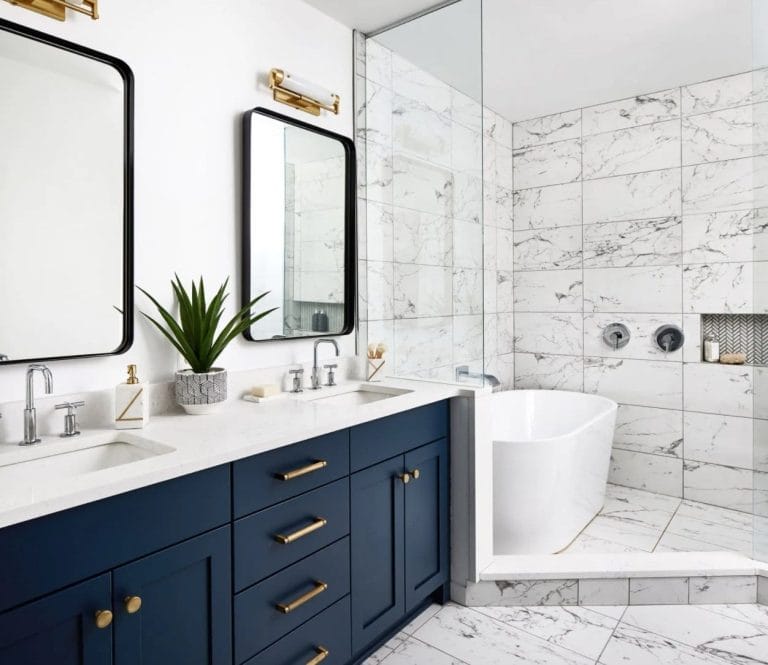
How To Choose the Right Glass Thickness [2026 Guide]
Glass Thickness: Key Takeaways
- Glass thickness directly impacts safety, durability, and visual quality; it’s one of the most important decisions in any glass installation
- Different applications require different thicknesses; for example, shelves and frameless showers need thicker, tempered glass, while smaller windows or cabinet inserts can use thinner panes
- Building codes often require thicker or safety-rated glass in high-risk areas like railings, stair panels, and overhead installations
- Standard glass thickness ranges from 3mm to 12mm depending on the use case, and should always match the function and support requirements of the space
- The Steel City Glass team knows what happens when the wrong glass goes in the right spot. That’s why our team doesn’t guess. We measure. We build. We double-check.
Glass looks simple. It isn’t.
It can shimmer, shine, shield, and showcase, but only if it’s the right glass, in the right thickness. And that’s where many homeowners miss a crucial step.
Too thin, and the surface could crack under pressure, flex with temperature swings, or fail under everyday use.
In fact, glass under 5mm is nearly three times more likely to shatter from thermal stress than thicker glass. That’s not a detail, that’s a liability.
This guide will show you how to choose with confidence and how Steel City Glass helps you get it right, from the first measurement to the final install.
How To Choose the Right Glass Thickness in 3 Steps
Not sure how thick your glass should be? Here’s how we help clients figure it out every day.
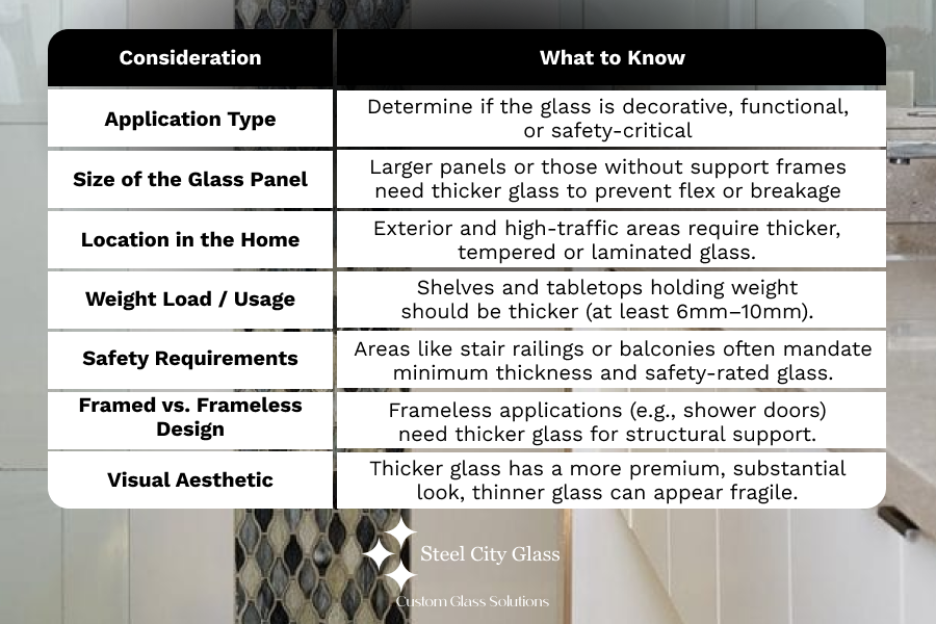
1. Define the Use
Start by asking: What is the glass being used for? The function of the glass will immediately narrow down your options.
- Decorative use (picture frames, cabinet inserts) can often use thinner glass like 3mm–4mm
- Structural or functional use (glass doors, tabletops, dividers) calls for thicker, stronger glass, often tempered or laminated
- Safety-critical areas like railings, stairs, or walkable surfaces must follow code and typically require 10mm–12mm glass or even thicker
Understanding the purpose helps determine how much strength and impact resistance your glass needs.
2. Factor in Location and Size
The placement and scale of the glass will affect what thickness is safe and appropriate.
- Larger panels or those without full framing (like frameless showers or large wall panels) require greater thickness to prevent flexing or failure
- High-traffic or exterior areas may demand tempered or laminated safety glass to comply with building codes and protect people nearby
- Shelf spans or unsupported edges need extra thickness to bear weight safely
The larger or more exposed the glass is, the thicker and stronger it should be.
3. Follow Expert Guidance and Code
Even if you’ve done your research, it’s smart to check in with a professional. Every home is different, and local codes often dictate minimum thickness for safety.
At Steel City Glass, we handle this step for you with:
- Precise on-site measurements
- Custom thickness recommendations based on use and environment
- Fabrication and installation that meet or exceed all code requirements
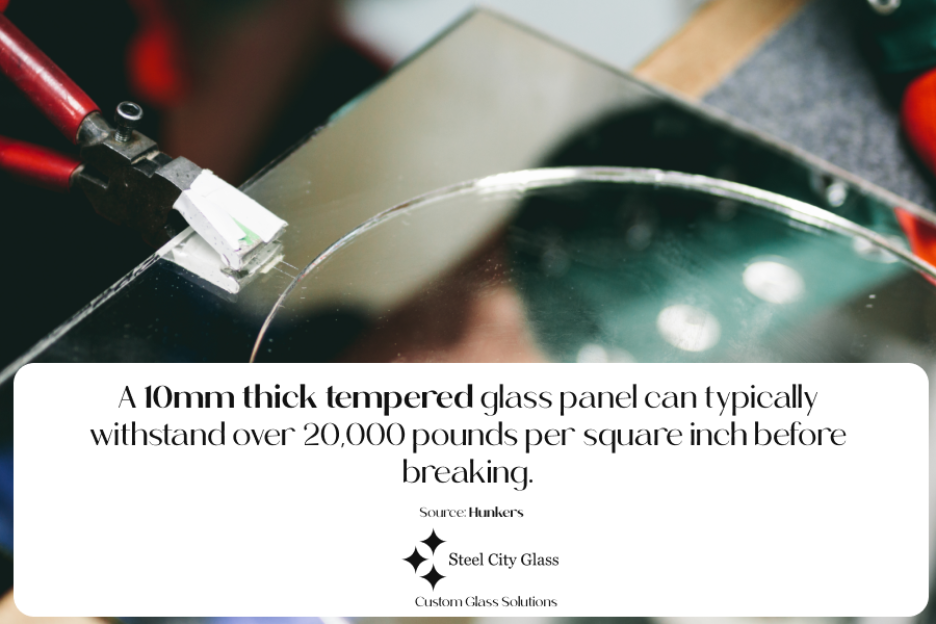
Choosing the Right Thickness by Application
Glass isn’t one-size-fits-all, and when it comes to safety and performance, thickness is one of the most important specs to get right.
Here’s a breakdown of the ideal glass thickness for common household applications.
- Window Glass Thickness
When it comes to window glass thickness, the goal is to balance energy efficiency with structural integrity.
- Standard window glass thickness: 3mm for older single panes, 4mm–6mm for most double-pane units
- Triple-pane windows may use 3 layers of 4mm glass for enhanced insulation
- Thickness also affects soundproofing and thermal efficiency, especially in colder climates
Need a better-performing window? See our Insulated Glass solutions.
- Shower Door Glass Thickness
For shower enclosures, thickness plays a major role in both stability and appearance.
- Frameless shower doors typically require 3/8” (10mm) or 1/2” (12mm) tempered glass for stability without a metal frame
- Framed shower doors can use thinner glass, usually 3/16” (5mm) or 1/4” (6mm), because the frame offers added support
- Factors like door size, hinges, and hardware also affect the ideal thickness
For custom-fit glass showers and enclosures, explore our Glass Panels offerings.
- Glass Table Top Thickness
Thinking about using glass for your dining table? If it’s a topper, you might get away with 6mm. But if it’s the whole surface, aim for 10mm or more.
- Protective tops over wood tables: 1/4” (6mm) is usually enough
- Freestanding glass tables: 3/8” (10mm) to 1/2” (12mm) is recommended for stability
- For larger tables, go thicker, especially if they’ll support decor, books, or daily use
Learn more about options and finishes on our Glass Table Tops page.
- Glass Shelving Thickness
For shelving, thickness is key for both appearance and strength, especially when holding heavy objects.
- 6mm (1/4”): Best for lightweight, short shelves or decorative pieces
- 8mm (5/16”): Ideal for mid-range shelves in bathrooms or kitchens
- 10mm (3/8”) or more: Needed for wider spans or heavy-duty shelving
The weight the shelf is meant to support and the distance between brackets should guide your decision. We can help you size it right on our Glass Shelving page.
- Partitions, Doors & Wall Panels
For glass partitions or room dividers, you’ll want a thickness that balances weight with visibility and structural safety.
- Minimum thickness: 3/8” (10mm) for stability
- Heavier-use areas (like office or retail dividers): 1/2” (12mm) or laminated glass
- Always use tempered or laminated safety glass for larger installations
For durable, custom-cut architectural glass, browse our Glass Panels section.
Glass Thickness Basics: Common Sizes and Units
Most people don’t think about millimeters until they’re staring at a quote. But when it comes to glass, those tiny numbers make a big difference.
Understanding mm vs. Inches
In the U.S., we often refer to glass thickness in inches, but manufacturers and specs may list measurements in millimeters.
Here’s a quick cheat sheet to help translate:
- 3mm ≈ 1/8″ – very thin, used for picture frames or interior decor
- 6mm ≈ 1/4″ – common for tabletops, shelves, and framed shower doors
- 10mm ≈ 3/8″ – often used for frameless shower doors or glass panels
- 12mm ≈ 1/2″ – heavy-duty glass, suitable for partitions or tables
Understanding glass thickness in mm helps ensure you’re comparing the right specs, especially when shopping or working with installers.
Glass Thickness Chart for Quick Reference
This glass thickness chart provides a quick way to compare common sizes, inch equivalents, and their best-use scenarios.
Save or screenshot for easy reference when planning your project:
| Thickness (mm) | Thickness (inches) | Common uses |
| 3mm | 1/8″ | Picture frames, cabinet doors, art displays |
| 4mm | 5/32″ | Single-pane windows, light interior panels |
| 6mm | 1/4″ | Glass shelves, tabletop covers, shower doors |
| 8mm | 5/16″ | Floating shelves, interior doors, shower glass |
| 10mm | 3/8″ | Frameless showers, glass dividers |
| 12mm | 1/2″ | Heavy glass tables, room partitions |
| 19mm | 3/4″ | Commercial applications, structural glass |
This chart is based on typical residential and light commercial use. Your installer may recommend slightly different specs depending on hardware or usage.
How Thick is 4mm Glass?
4mm glass is a fairly thin material, most often used in light-duty residential applications. While it’s stronger than 3mm, it’s still not suitable for load-bearing or unsupported installations.
Here’s where you’ll typically find 4mm glass:
- Interior single-pane windows or storm panels
- Small mirrors or display glass
- Picture frames for art and photos
- Decorative cabinet glass inserts
Safety Considerations and Building Codes
Glass installations in your home aren’t just about aesthetics. Glass thickness safety and compliance matter just as much.
There are two main types of safety glass used in residential settings:
- Tempered glass is heat-treated to be up to four times stronger than regular glass. If it breaks, it crumbles into small, dull pieces instead of sharp shards, making it ideal for doors, shower enclosures, and panels near floor level.
- Laminated glass features two layers of glass bonded with a clear plastic interlayer. Even when cracked, the glass stays intact, making it the safer choice for overhead applications, stair panels, and glass railings.
In many cases, building codes require thicker or safety-rated glass in high-risk or high-traffic areas, including:
- Glass railings and balconies
- Staircase glass panels or balustrades
- Overhead or walkable glass installations
- Large frameless showers or room dividers
CTA: Get a free estimate from Steel City Glass. Contact us.
Trust Steel City Glass to Get the Thickness Right
Selecting the right glass thickness isn’t just a technical decision, it’s the key to a safer, longer-lasting, and better-looking result.
At Steel City Glass, we don’t believe in guesswork or one-size-fits-all solutions. Every installation is custom-measured, professionally fabricated, and tailored to your home’s exact needs.
Why homeowners and contractors choose Steel City Glass:
- Over 30 years of glass expertise with on-site measurements and expert consultations
- Fully custom glass fabrication for showers, windows, shelving, partitions, and more
- Code-compliant installations that meet safety standards for residential and commercial spaces
- Local service and fast turnaround with a reputation for precision and reliability
- Trusted by contractors, designers, and homeowners across the region for repeat work and referrals
Glass Thickness: FAQs
Have questions about glass thickness? You’re not alone. These are the most common questions homeowners ask when trying to choose the safest and most stylish glass for their space.
What is the standard glass thickness for windows?
Standard window glass thickness is typically 3mm to 6mm for single panes and 4mm or more for double or triple-pane insulated glass. Energy-efficient windows often use multiple layers of 4mm or 6mm glass separated by air or gas.
How thick should shower door glass be?
Shower door glass thickness depends on the style. Frameless doors usually use 3/8″ (10mm) or 1/2″ (12mm) tempered glass for strength, while framed doors can use thinner glass like 1/4″ (6mm).
How thick should a glass table top be?
The recommended thickness for glass table tops ranges from 1/4″ (6mm) for protective covers to 3/8″–1/2″ (10–12mm) for freestanding glass tables. Thicker glass is advised for larger surfaces or heavy use.
Is 4mm glass thick enough for windows or shelves?
It’s fine for small windows and cabinets. But for shelving? Skip it. It’s too fragile.
How do I know which glass thickness is right for my project?
Choosing the right glass thickness depends on the application, size, and safety needs. A professional installer like Steel City Glass can assess your space and recommend the correct thickness based on usage and code requirements.
Why does glass thickness matter in home design?
Glass thickness affects safety, durability, and appearance. Thicker glass is better suited for shelves, frameless showers, or partitions because it resists bending and breakage. It also supports better insulation in windows and adds a more substantial, high-end look to your space.